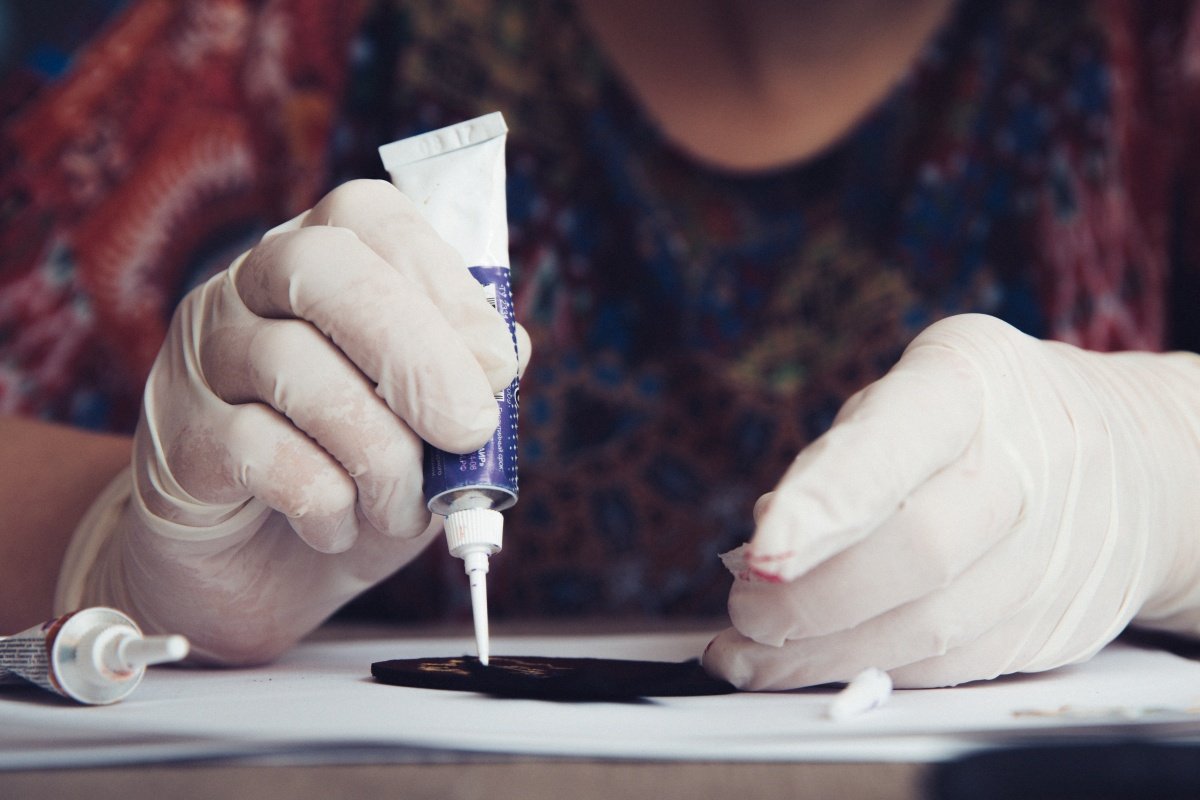
Best Glue for Miniature Houses: What Actually Works on Wood, Paper & Plastic
A miniature kit can be wonderfully relaxing right up until one tiny shelf refuses to stay put.
Then the questions start:
Can you use regular white glue? Is super glue better? What about clear plastic windows, paper books, fabric cushions, or a loose wooden joint?
The frustrating part is that there isn’t one glue that works best for every miniature-house project.
Miniature kits often combine paper, wood, plastic, metal, fabric, and other tiny decorative materials in the same build. An adhesive that works beautifully on paper may perform poorly on smooth plastic, while a glue strong enough for a structural joint may be unnecessarily messy for a tiny printed book.
So instead of looking for one “best miniature glue,” it helps to match the adhesive to the material and the job.
For this guide, I compared current adhesive manufacturer guidance with practical advice commonly shared by miniature-house, book-nook, and model-building communities.
One important note before we start: this is a research-based guide, not a claim that I have personally tested every adhesive listed here. Where there are material limitations or safety considerations, manufacturer guidance should always take priority over a single builder’s experience.
Quick Answer: Which Glue Should You Use?
For most traditional miniature-house projects, tacky craft glue is the easiest all-around starting point.
It works particularly well with porous materials such as paper, cardboard, unfinished wood, felt, and fabric.
Regular PVA or white craft glue is another useful option for paper and wood, especially when you want a little more time to position the piece.
Keep a small bottle of precision super glue or CA gel as a secondary tool for repairs, tiny metal parts, hard plastic details, or stubborn pieces that need a fast bond.
For smooth plastic, glass, metal, or mixed-material joints, look for a multi-surface adhesive specifically rated for those materials.
The simplest rule is:
Use the least aggressive adhesive that will reliably hold the part.
Stronger is not always better in miniature building.
Miniature House Glue Quick Reference
| Material / Situation | Best Starting Choice | Why | Use With Caution |
|---|---|---|---|
| Paper, wallpaper, tiny books | Tacky glue or PVA/white glue | Clear-drying, repositionable, easy to spread thin | Too much water-based glue can wrinkle paper |
| Thin wood and MDF details | Tacky glue or PVA/wood glue | Good bond on porous surfaces | Wood glue can be messy or visible; hold pieces in place while setting |
| Tiny parts that keep slipping | Precision CA/super glue gel | Fast grab and very small application | Can bond fingers, leave white haze, and gives little time to reposition |
| Clear or glossy plastic | Plastic-compatible clear adhesive; test first | Helps reduce the risk of visible damage | Standard CA can cause white haze or stress cracking on some plastics |
| Wood-to-plastic or metal details | Material-compatible multi-surface adhesive | Useful when water-based glue will not grab a smooth surface | Some formulas are unsuitable for paper or certain plastics |
| Large paper surfaces or wallpaper | Thin PVA, paste, or suitable paper adhesive | Longer working time makes it easier to smooth bubbles and align edges | Excess adhesive can warp or wrinkle the sheet |
| Emergency reinforcement | Small amount of CA gel | Quick, strong tack | Better as a backup than as the only glue for an entire miniature house |
There Isn’t One Perfect Glue for Every Miniature
There isn’t one glue that works best for every miniature-house project. The right choice depends on the materials you’re joining and how much working time you need.
For example, a miniature room might include:
- wooden shelves
- printed paper books
- clear plastic windows
- fabric cushions
- metal wire
- acrylic decorations
Trying to assemble all of those materials with the same adhesive can quickly become frustrating.
Tacky glue is popular because its thicker texture gives small pieces some initial grip while still allowing a little repositioning.
PVA is inexpensive and useful on porous materials but tends to be thinner.
Super glue gives you speed, but very little time to correct a mistake.
Multi-surface adhesives can handle difficult material combinations but may be excessive for delicate paper work.
So instead of asking:
“What is the strongest glue?”
A better question is:
“What glue makes sense for this particular part?”
1. Tacky Glue: The Best All-Around Choice for Most Miniature Builders
If you want to buy just one bottle before starting a traditional miniature house, tacky craft glue is probably the easiest place to begin.
Tacky glue is essentially a thicker craft adhesive designed to grab materials more quickly than runny white glue.
That thickness makes a surprisingly big difference when you are working at miniature scale.
Imagine trying to position a tiny shelf while the glue underneath behaves like water. The piece can slide out of alignment before you even remove your fingers.
A thicker glue gives you more control.
Aleene’s Original Tacky Glue, for example, is officially recommended for materials including wood, paper products, metal, felt, foam, ceramics, and non-washable fabric. It dries clear and forms a permanent bond.
That material range happens to overlap with many of the materials found in traditional miniature kits.
Tacky glue works especially well for:
- Paper books
- Printed accessories
- Wallpaper edges
- Thin wooden trim
- Small porous wooden pieces
- Fabric
- Felt
- Decorative accessories
- Pieces that need a little initial grip
It is also forgiving enough for beginners because you normally have some time to reposition a piece before the adhesive fully sets.
Where tacky glue is less ideal
Tacky glue is not automatically the strongest option for every structural joint.
If a thick wooden joint is under tension, or a smooth plastic piece keeps springing away from the surface, adding more tacky glue may not solve the problem.
That is usually a sign that you need either:
- better surface preparation,
- a better-fitting joint,
- or an adhesive designed for that particular material.
2. PVA or White Craft Glue: Cheap, Useful, and Better Than Many Beginners Expect
Regular white craft glue often gets dismissed as “school glue,” but for porous miniature materials it can work surprisingly well.
PVA adhesives are particularly useful with materials such as:
- paper
- cardboard
- unfinished wood
- certain fabrics
- other porous craft materials
Elmer’s Glue-All, for example, is designed for paper, fabric, wood, ceramics, leather, and general craft work.
For many miniature projects, that is already enough.
The biggest difference between standard white PVA glue and tacky glue is usually handling.
PVA tends to be thinner.
That means a tiny vertical piece may move while the adhesive begins to set.
But the extra working time can sometimes be useful.
If you are carefully aligning:
- wallpaper
- a printed panel
- flooring
- a large sheet of paper
you may actually appreciate having a little more time to adjust it.
Use PVA when:
- You are bonding paper to paper.
- You are bonding paper to porous wood.
- You need more time to align a flat surface.
- You already have a good craft PVA at home.
- You can hold, clip, or weight the piece while it starts to set.
The biggest beginner mistake: using too much
More glue does not necessarily create a better miniature.
A thick puddle:
- takes longer to dry,
- squeezes out around tiny pieces,
- can become visible,
- and may introduce enough moisture to wrinkle thin paper.
For miniature work, you often need much less adhesive than you think.
A thin film or a few tiny dots may be enough.
3. Super Glue / CA: Very Useful, but Not a Universal Miniature Glue
Cyanoacrylate, usually known as CA glue or super glue, solves one problem extremely well:
speed.
Some CA products can begin setting within seconds.
That makes them useful when a tiny piece refuses to stay still long enough for ordinary craft glue to dry.
A precision gel formula can be particularly useful because it does not run as easily as thin liquid super glue.
Super glue can be useful for:
- repairing a snapped wooden tab
- securing tiny metal pieces
- attaching certain hard-plastic details
- reinforcing a tiny connection
- fixing a joint that cannot easily be clamped
- close-fitting parts that need a quick set
But the speed that makes CA useful also makes it unforgiving.
You may have almost no time to correct the alignment.
And excess glue can be difficult to hide.
That is why I would treat super glue as a special-purpose tool, rather than the default adhesive for an entire miniature house.
Be Careful Using Super Glue Around Clear Plastic
This deserves its own section because clear miniature windows are one of the easiest places to ruin an otherwise beautiful build.
Cyanoacrylate can sometimes leave a cloudy white haze around the bond.
This effect is commonly called:
blooming or frosting.
It happens when vapors from curing CA react around the adhesive area.
Too much adhesive can make the problem worse.
Certain plastics can also be sensitive to cyanoacrylate.
Technical guidance from adhesive manufacturers warns that uncured CA can contribute to stress cracking in materials such as acrylic or polycarbonate under certain conditions.
That matters because miniature houses frequently use transparent plastic for:
- windows
- doors
- display panels
- signs
- mirrors
- decorative covers
A cloudy white mark that would barely matter on the underside of a wooden floor can be extremely obvious on a transparent window.
So around clear plastic:
test first.
And use as little adhesive as possible.
When Not to Reach for Super Glue
Avoid making CA your automatic choice for:
Large paper surfaces
It sets too quickly and gives you almost no opportunity to smooth or reposition the material.
Clear windows
Unless the adhesive is specifically suitable for that plastic and you have tested it first.
Parts that still need alignment
Once CA grabs, you may not get another chance.
Large gaps
More super glue is not a substitute for a properly fitting joint.
If two wooden pieces do not fit together correctly, fix the fit before trying to glue the problem away.
4. Multi-Surface Adhesives: Useful for Difficult Material Combinations
Miniature houses sometimes include awkward material combinations such as:
- wood to plastic
- plastic to metal
- metal to glass
- decorative plastic to painted wood
These are situations where a general craft PVA may struggle.
A flexible multi-surface adhesive can sometimes be useful.
E6000 Craft is one example. Its technical information lists compatibility with materials including wood, metal, glass, ceramics, rubber, vinyl, leather, and many plastics.
Once cured, the adhesive remains somewhat flexible rather than becoming completely rigid.
That can be useful for mixed-material joints.
However, this is also a good example of why you should always check the exact product instructions.
Different adhesives—even products within the same brand family—can have different material restrictions.
Some formulations are not recommended for materials such as:
- certain paper products
- polystyrene
- polyethylene
- polypropylene
- Styrofoam
So a multi-surface adhesive is best treated as a targeted second adhesive, rather than something you automatically use throughout the entire miniature.
What About Hot Glue?
Hot glue is tempting.
A part keeps falling over.
You are tired of holding it.
The glue gun is sitting nearby.
One squeeze and the piece stays exactly where you put it.
Unfortunately, hot glue has several disadvantages for miniature work.
The bead is relatively thick.
That thickness may:
- create visible lumps
- push pieces out of alignment
- show through thin materials
- make delicate decorations look bulky
You also have limited time to position tiny components before the glue begins cooling.
Hot glue can still be useful for a hidden repair or reinforcement where appearance does not matter.
But I would not make it my general adhesive for detailed miniature construction.
The Material-by-Material Miniature Glue Guide
Instead of memorizing brands, it is easier to think about materials.
Paper, Printed Sheets, Wallpaper and Tiny Books
Start with:
tacky glue or PVA
Use a small amount.
Spread it thinly.
For larger paper pieces, work carefully from the center outward so you do not trap bubbles or create wrinkles.
Avoid saturating thin paper with adhesive.
Too much water-based glue can cause printed sheets to curl or buckle.
Wood and Laser-Cut Board
For small decorative wood pieces:
tacky glue or PVA is usually enough.
For a more structural wood-to-wood connection, a wood-compatible PVA can provide a stronger bond, although it may require more holding or curing time.
But before applying any glue:
dry-fit the pieces.
This step is especially important with laser-cut kits.
If a wooden tab is extremely tight, glue is probably not the first solution.
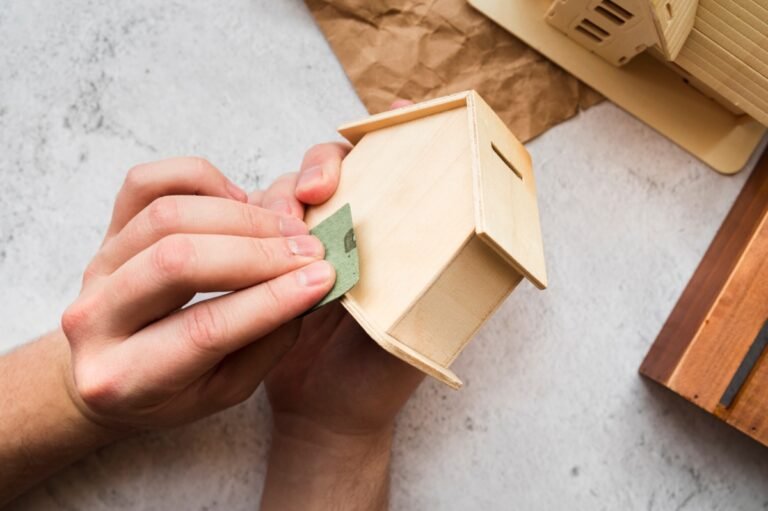
A better first step may be gently sanding the contact area until the joint fits properly.
Trying to force a poorly fitting joint together with adhesive can put extra stress on delicate wooden tabs.
Plastic
Plastic is more complicated because “plastic” describes many different materials.
A lightweight decorative plastic piece may hold with a craft adhesive.
A smooth structural plastic surface may not.
If possible, identify the material before choosing the glue.
When using CA:
- apply very little
- keep it away from visible clear surfaces
- test first
- allow good ventilation
If a plastic component is important or load-bearing, use an adhesive specifically rated for that type of plastic.
Metal Wire and Tiny Hardware
For tiny metal components, a water-based PVA often does not provide enough grip.
A small amount of:
- precision CA gel
- or compatible multi-surface adhesive
may work better.
Make sure the surfaces are:
- clean
- dry
- free from dust
- free from oil
At miniature scale, the applicator matters almost as much as the adhesive itself.
Which brings us to one of the simplest tools in miniature building.
Fabric and Felt
Tacky glue is an easy starting point for fabric and felt.
Its thicker consistency makes it easier to control than very runny white glue.
The key is restraint.
Too much adhesive can soak through delicate fabric and leave:
- a stiff area
- a dark patch
- a visible glue mark
Apply tiny amounts to hidden contact points whenever possible.
One of the Most Useful Miniature Glue Tools Costs Almost Nothing
A toothpick.
Seriously.
Miniature pieces are often far too small for a standard glue bottle nozzle.
Instead of squeezing glue directly onto the part, put a tiny amount onto:
- wax paper
- scrap plastic
- leftover packaging
- another disposable surface
Then transfer the adhesive using:
- a toothpick
- pin
- micro brush
- fine applicator
- needle-tip bottle
This gives you much more control.
And in miniature building, control often matters more than raw adhesive strength.
A modest glue applied neatly exactly where it is needed can produce a better result than the strongest glue spread everywhere.
A Simple Glue Routine for Beginners
You do not need to turn glue selection into a science project.
Follow this routine.
1. Check whether the kit actually needs glue
Some modern miniature and book-nook kits use:
- snap-fit construction
- slot-and-tab connections
- pre-applied adhesive
- double-sided tape
You may not need glue for every step.
2. Dry-fit first
Put the pieces together without adhesive.
Check:
- alignment
- orientation
- fit
- tension
If something does not fit properly, solve that first.
3. Identify the materials
Ask what you are actually connecting:
paper + paper?
wood + wood?
plastic + wood?
metal + plastic?
That immediately narrows the adhesive choices.
4. Start with tacky glue or PVA for porous materials
Paper, wood, cardboard, fabric and felt usually do not require aggressive adhesive.
5. Use CA only when you actually need speed
Think of super glue as your problem-solving backup.
Not your default bottle.
6. Test unfamiliar adhesives
Especially on:
- clear plastic
- painted pieces
- printed surfaces
- glossy plastic
A leftover frame or hidden scrap is perfect for testing.
7. Apply less than you think you need
You can always add a little more.
Removing a giant dried blob from a tiny table is considerably harder.
8. Let the joint cure
Something that feels dry after a few minutes may not have reached full strength yet.
Give structural joints enough time before putting them under tension.
What Glue Would I Buy for a First Miniature House?
If I were putting together a simple beginner toolkit based on the material guidance above, I would not buy five different adhesives.
I would start with two.
1. A small bottle of clear-drying tacky craft glue
Ideally with:
- a fine nozzle
- or a separate precision applicator
This would handle most paper, wood, fabric and decorative assembly.
2. A small precision CA or super-glue gel
I would keep this for:
- repairs
- snapped tabs
- tiny metal parts
- stubborn details
- situations where a fast set is genuinely useful
If the project contained a lot of:
- smooth plastic
- glass
- metal
I would then add a compatible multi-surface adhesive after checking the materials.
For most beginners, that is plenty.
You do not need a shelf full of adhesives before you build your first miniature room.
Common Miniature Glue Problems
Why won’t my miniature piece stay glued?
The adhesive itself may not be the problem.
Check whether:
- the surface is dusty
- the material is very smooth
- the pieces do not fit properly
- the joint is under constant tension
- you moved the piece before the glue cured
- too much adhesive was applied
- the glue is not suitable for that material
A stronger glue is not always the answer.
Why is my paper wrinkling after I glue it?
You may be using too much water-based adhesive.
Thin paper absorbs moisture quickly.
Try:
- using less glue
- spreading it more evenly
- applying from the center outward
- pressing the paper flat while it dries
Why is my super glue turning white?
This is probably CA blooming or frosting.
It can occur when cyanoacrylate vapors settle around the curing adhesive.
Applying excessive CA can increase the risk.
It is especially noticeable around dark surfaces and clear plastic.
Should I glue a wooden tab that is too tight?
Not immediately.
If the tab does not fit properly when dry, adding glue will not solve the underlying problem.
Very gently sanding the contact point may be a better solution.
Do not aggressively sand the entire piece—remove only enough material to achieve a comfortable fit.
What if the joint is too loose?
A loose joint is a different problem.
If the construction relies on friction but the piece repeatedly falls out, a tiny amount of appropriate adhesive may help.
But first check whether:
- the piece is facing the correct direction
- another component is supposed to lock it in place
- the joint was damaged during assembly
Understanding why the connection is loose can help you avoid permanently gluing something that was designed to move.
FAQ
Can I use Elmer’s glue for a miniature house?
Yes, for many porous materials.
Elmer’s Glue-All is designed for materials including paper, fabric and wood.
It may be thinner and slower to grab than tacky glue, so you may need to hold or support very small pieces while they begin to set.
Is tacky glue better than super glue for miniatures?
Neither is universally “better.”
They solve different problems.
Tacky glue is generally easier for:
- paper
- thin wood
- fabric
- decorative pieces
because it gives you more working time.
Super glue is useful when you need:
- a very fast bond
- a tiny repair
- a difficult metal or hard-plastic connection
For many builders, having both is more useful than choosing one.
Can I use super glue on a book nook?
Yes, but use it selectively.
Super glue can be useful for repairs and stubborn small connections.
However, it dries very quickly, can leave visible marks if overapplied, and may cause frosting around certain clear plastic pieces.
It is usually better as a backup adhesive than as the only glue used throughout the project.
What glue should I use for miniature-house windows?
Do not automatically reach for ordinary super glue.
Transparent plastic can show CA blooming or frosting very clearly.
Use an adhesive compatible with the exact plastic when possible, apply very little, and test it on scrap material or a hidden edge first.
Do all miniature-house kits need glue?
No.
Some kits use traditional glued construction, while newer designs may use:
- snap-fit pieces
- tabs and slots
- pre-applied adhesive
- double-sided tape
Always check the instructions for your particular kit before buying extra glue.
Can I use hot glue for miniatures?
You can, but it is rarely the best option for fine visible details.
Hot glue creates a relatively thick bead, which can be difficult to hide at miniature scale.
It is more useful for hidden reinforcement or repairs where appearance is not important.
Is wood glue necessary for miniature houses?
Usually not for every part.
Standard tacky glue or PVA is sufficient for many small wooden decorative components.
A dedicated wood glue may be useful for larger structural wood-to-wood joints, but miniature pieces rarely experience the loads found in full-size woodworking.
How much glue should I use?
Less than you probably expect.
For many tiny components, one or two small dots are enough.
Your goal is to create a bond without having visible adhesive squeeze out around the finished piece.
Final Thoughts
The best miniature-house glue is not really one particular product.
It is the adhesive that:
- matches the material,
- provides enough working time,
- creates the strength the joint actually needs,
- and disappears into the finished scene.
For most beginners, tacky glue is probably the best one-bottle starting point because it is forgiving and works with many of the porous materials found in miniature kits.
PVA is a perfectly reasonable alternative for paper and wood.
Super glue is extremely useful as a precision backup—but it does not need to touch every piece in your miniature.
And multi-surface adhesives are best saved for joints that actually require them.
Most importantly, if a part refuses to stay together, do not immediately assume you need stronger glue.
Sometimes the actual problem is:
- a tight tab
- a warped wooden piece
- a glossy surface
- a loose connection
- poor alignment
- or too much tension on the joint
Fixing the connection first can save both the miniature piece and your patience.
And when you are working with something only a few millimeters wide, that little bit of patience often matters more than having the strongest glue on the shelf.