
Screen-Free Hobbies for Adults: 10 Ways to Find Your Next Interest
Looking for a hobby away from a screen, but not sure what you would enjoy? Start with the kind of activity you want: making, solving, reading, growing, or keeping memories.
This guide compares ten screen-free hobbies for adults so you can choose one small experiment. It is a starting-point guide, rather than a shopping list or a promise that every activity will feel relaxing.
You do not need to buy everything at once. Try a borrowed puzzle, a notebook you already own, or a small set of craft materials before committing to a bigger project.
Choose by the Experience You Want
- Follow clear steps: try a miniature kit, a simple model, or a puzzle.
- Repeat a familiar movement: explore crochet or hand knitting, allowing time to learn the basics.
- Experiment freely: choose sketching, painting, or creative writing.
- Build a small routine: try plant care, reading, or journaling.
- Keep something personal: make a scrapbook or a simple decorative object.
Think about space, setup, cost, and whether you prefer instructions or open-ended choices. The right first hobby is one you are curious enough to try, not the one with the most impressive finished photograph.
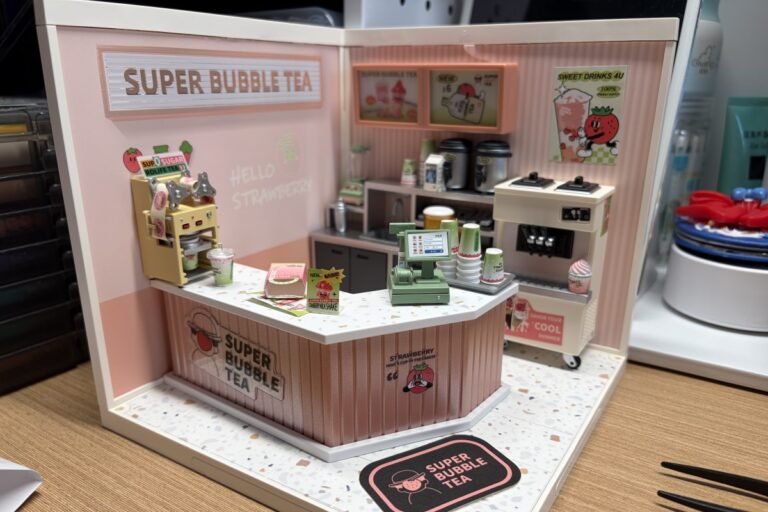
1. DIY Craft Kits (Miniature Building & Book Nooks)
DIY miniature crafting offers a structured project with a finished scene to display.
Activities like building miniature houses or book nooks allow adults to:
- Focus on hands-on work
- Follow step-by-step assembly
- Experience deep concentration (flow state)
- Create beautiful home décor pieces
Popular examples include miniature rooms, cafés, libraries, and seasonal scenes.
Unlike passive entertainment, DIY kits give you a physical sense of achievement when you finish a project.
2. Crochet and Hand Knitting
Crochet and hand knitting turn yarn into a project one stitch at a time. Their practical appeal includes:
- A repeatable stitch pattern
- A project you can pause
- Something useful or decorative to keep
It’s also highly flexible—you can make blankets, small dolls, home decor, or even combine crochet with miniature crafts for unique hybrid projects.
Crochet is especially popular among people who want something relaxing they can do while listening to music or podcasts (without staring at a screen).
3. Journaling and Creative Writing
Writing by hand gives you somewhere to collect thoughts, record a day, or develop a story without opening another app.
You can try:
- Gratitude journaling
- Daily reflection
- Morning pages
- Creative storytelling
Start with a few lines. You can keep the pages private, and they do not need to become polished writing.
4. Puzzles and Model Building
Puzzles and physical model kits suit people who enjoy a defined task and a visible result.
They are:
- Low-pressure
- Highly immersive
- Reward-based (you see progress visually)
These hobbies may suit people who prefer a defined task; choose a difficulty you find enjoyable rather than assuming every puzzle will feel relaxing.
5. Painting and Sketching
You don’t need to be “good at art” to enjoy painting or drawing.
Possible starting points include:
- A page of color experiments
- A sketch of an everyday object
- A small watercolor study
- A drawing made without judging the result
A small watercolor study or a sketch of an everyday object can give you a concrete subject to explore.
6. Gardening and Plant Care
Gardening connects you directly with nature. Even small indoor plants can become a calming daily ritual.
Small plant-care projects include:
- Looking after one indoor plant
- Growing herbs by a suitable window
- Keeping a simple watering record
- Learning what light and soil your plant needs
Watching something grow slowly over time is one of the most rewarding offline experiences.
7. Baking and Cooking as a Creative Hobby
Cooking is often seen as a daily task, but it can also become a mindful hobby.
Measuring ingredients, following recipes, and creating something from scratch is deeply satisfying.
Bonus: you get something delicious at the end.
8. Reading Physical Books
Reading paper books remains one of the best ways to disconnect from screens.
Ways to make reading a manageable habit include:
- Choosing a book you genuinely want to read
- Borrowing from a library before buying
- Keeping a book within reach
- Starting with a few pages rather than a reading target
Creating a cozy reading corner can turn this into a daily ritual.
9. Scrapbooking and Memory Crafts
Scrapbooking combines creativity with emotional storytelling.
You can preserve:
- Travel memories
- Family moments
- Personal milestones
It gives you a way to arrange photographs, notes and keepsakes at your own pace.
10. Mindful DIY Rituals (Slow Crafting)
Not all hobbies need to be complex. Even simple crafts like:
- Folding paper
- Organizing craft supplies
- Making small decorative items
- Assembling DIY kits
can give you a small activity to focus on without needing a complicated project.
Compare One Small First Try
Choose the experience you want before choosing supplies. The examples below are small experiments, not completion-time promises or relaxation scores.
| What you want | Try with what you have | Check before committing |
|---|---|---|
| A clear next step | A borrowed puzzle or one illustrated model step | Can the pieces be secured when the table is needed? |
| Room to experiment | A page of pencil marks or a paper arrangement | Do open-ended choices appeal to you? |
| A repeated hand movement | A small yarn practice piece with instructions you understand | Allow time to learn before expecting the task to feel familiar. |
| A quiet interest without craft tools | A library book, a notebook or observing an existing houseplant | Choose something you are curious about without adding an obligation. |
Try one small version before buying a complete setup. If the activity does not interest you, change it. If you already know the hobby and simply want something manageable after work, use the after-work project guide instead.
Final Thoughts
Screen-free hobbies are not about rejecting technology—they are about restoring balance.
You do not need to choose the fastest or most productive hobby. Think about whether you want to:
- Slow down
- Feel present
- Create something with your hands
- Reconnect with yourself
Whether it’s crochet, miniature building, painting, or journaling, the best hobby is the one that helps your mind feel lighter.
If your main goal is unwinding on a weekday evening, start with these screen-free hobbies for after work.