
Are Cheap Miniature House Kits Worth It? What to Check Before You Buy
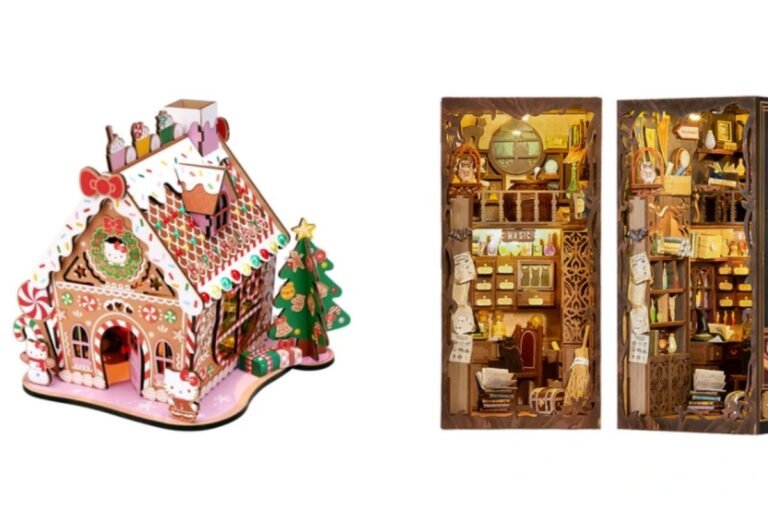
You find a miniature house you love.
It has warm lights, tiny books, plants, little furniture, and exactly the kind of cozy room you can imagine spending a weekend building.
The price is $45.
Then you keep searching.
Suddenly, what appears to be the same miniature is $32.
Then $24.
Then $17.
The photos look almost identical.
So naturally you wonder:
Why would I pay more?
And more importantly:
Are cheap miniature house kits actually worth buying?
Sometimes, absolutely.
A lower price does not automatically mean a worse miniature. The same or very similar kits can appear through different sellers, retailers, and marketplaces at significantly different prices, and miniature builders regularly report finding perfectly good kits for much less than they expected.
But a cheap kit can also become expensive in a different currency:
your time.
Poorly fitting wood, unclear instructions, missing pieces, low-quality printed parts, unreliable lighting, or nonexistent replacement support can turn a relaxing weekend project into hours of troubleshooting.
So I would not ask:
“Is this kit too cheap?”
I would ask:
“What am I actually getting for this price?”
Quick Answer: Are Cheap Miniature House Kits Worth It?
Yes. A cheap miniature-house or book-nook kit can be excellent value if the laser-cut pieces fit well, the instructions are complete, the printed parts are usable, the lighting works, all important pieces are included, and you have some way to resolve a problem if something arrives damaged or missing.
Price alone is a weak predictor of whether you will enjoy the build.
For a budget kit, I would pay particular attention to real customer build photos, part fit, instruction quality, included materials, lighting, seller/manufacturer identity, and replacement or return options.
The cheapest kit is not necessarily the best value.
The best value is the kit that you can actually finish without spending the savings fixing it.
Cheap Miniature Kit: Quick Quality Check
| Before You Buy | Good Sign | Warning Sign |
|---|---|---|
| Real build photos | Multiple customer photos of completed and in-progress builds | Only polished promotional renders |
| Wooden parts | Reviews mention clean fit and straightforward assembly | Repeated reports of pieces not fitting or breaking |
| Instructions | Numbered, illustrated manual shown in listing/reviews | Missing pages, vague diagrams, no manual shown |
| Paper details | Pre-cut stickers or clean, detailed printing | Faded printing or everything must be manually cut unexpectedly |
| Lighting | Clear description of LEDs, batteries/USB and switch | Lighting details are vague or reviews report failures |
| Box contents | Clear list of included supplies | Unclear whether glue, batteries or accessories are included |
| Missing parts | Seller/manufacturer offers replacement help or easy returns | No identifiable support route |
| Seller identity | Clear manufacturer/product information | Same photos under many vague names with no identifiable maker |
| Price | Lower because of sale, direct channel or simpler construction | Extremely low price with no reviews or buyer protection |
| Reviews | Detailed 3–4 star reviews discussing both strengths and weaknesses | Large number of generic one-line reviews |
I would look at this table before worrying too much about the number on the price tag.
Cheap Does Not Automatically Mean Low Quality
This is the first assumption worth getting rid of.
Miniature kits often move through several layers before reaching you.
A manufacturer may sell directly.
The same product may also appear through:
a marketplace seller,
a specialist miniature shop,
a craft retailer,
or another reseller.
Each channel can have different:
shipping costs,
warehousing costs,
promotions,
customer-service costs,
and profit margins.
That means two apparently identical boxes can legitimately have very different prices.
In book-nook communities, experienced buyers regularly report finding kits through different sales channels at noticeably different prices, sometimes believing them to be the same manufacturer-made product rather than a fundamentally different kit.
So seeing a $20 version of something listed elsewhere for $40 does not automatically mean the $20 one is fake or unusable.
But it also does not prove that the products are identical.
That is where the research starts.
The Same Finished Photo Does Not Mean the Same Building Experience
This is probably the biggest trap.
Two listings can show what looks like exactly the same tiny bookstore.
But the contents may differ in ways that are almost invisible in product photography.
One version might include:
pre-cut stickers,
printed wooden panels,
better-fitting laser-cut pieces,
and a detailed manual.
Another version may expect you to:
cut the decorative paper yourself,
glue every printed detail,
adjust poorly fitting parts,
and work from simplified instructions.
One builder comparing a very inexpensive version with more conventional kits specifically reported differences such as paper replacing stickers, less detailed printing, poorer fit, breakage, and weaker instructions.
That does not mean every inexpensive kit has those problems.
It means you should evaluate the build process, not only the finished photograph.
1. Look at Real Customer Photos Before Anything Else
The polished hero image answers:
“What is this supposed to look like?”
Customer photos answer:
“What does it actually look like when a normal person builds it?”
Those are different questions.
I particularly like reviews that show:
the wooden sheets,
the instruction booklet,
the work in progress,
the lighting,
and the finished model.
Zoom in.
Look at the edges.
Do the walls sit square?
Are there obvious gaps?
Does the printed material look sharp?
Does the lighting resemble the listing?
One miniature-shopping discussion offered a particularly useful tactic: rather than focusing only on glowing five-star feedback, the buyer preferred reviews with photographs and often read three-star reviews because they were more likely to explain both what worked and what did not.
I think that is good advice far beyond miniature kits.
Five-star reviews tell you why somebody loved it.
One-star reviews tell you what went catastrophically wrong.
Three-star reviews often tell you what you actually need to know before building.
2. Cut Quality May Matter More Than Almost Anything Else
A laser-cut miniature relies on tolerances measured in tiny amounts.
A tab that is slightly too wide can become extremely difficult to insert.
A slot that is slightly misplaced can throw off an entire wall.
One poor connection can affect the next one.
And suddenly something that should take thirty seconds becomes:
sand,
test,
sand,
test,
force,
stop,
disassemble,
try again.
A good kit does not necessarily mean every wooden tab slides together effortlessly.
Press-fit designs are often deliberately snug.
But the pieces should generally feel as though they were designed to meet one another.
Current book-nook buying guidance consistently identifies clean, accurate laser cutting as one of the most important quality signals because bad tolerances multiply the difficulty of almost every later step.
Real builders run into this problem too. Community troubleshooting threads include people discovering late in a build that walls or ceilings will not align properly, sometimes requiring disassembly or adjustment before the project can continue.
If several reviews say:
“The pieces are tight but fit.”
That does not worry me much.
If several say:
“Nothing lines up.”
I pay attention.
What If the Pieces Are Just Tight?
Tight does not necessarily mean poor quality.
Laser-cut wooden kits frequently use friction to hold components together.
The question is whether the fit can be corrected with a small, controlled adjustment.
Fine sandpaper or a sanding stick can solve minor tolerance problems.
But if you are repeatedly filing major structural components just to make the project physically possible, the savings begin to feel less impressive.
If this happens during a build, see my guide on how to stop wooden tabs from breaking in miniature and book-nook kits before deciding that more force is the answer.
3. Instructions Are Part of the Product
This is easy to underestimate when shopping.
You are buying:
wood,
paper,
plastic,
lights,
accessories—
and instructions.
Those instructions may determine whether the first six items become a miniature or remain in a box.
A good manual should help you understand:
which piece you need,
what direction it faces,
where it goes,
and what the stage should look like when finished.
Poor instructions cost nothing to manufacture compared with wood or electronics.
But they can cost you hours.
And instruction failures are not hypothetical. In a recent book-nook discussion, a builder discovered that entire groups of steps were missing from the manual and eventually had to use leftover pieces and online product footage to reconstruct the missing part of the process.
That is creative problem-solving.
It is not something I would intentionally pay for.
How Do You Judge the Instructions Before Buying?
Look through customer photos.
People often photograph the manual.
You can learn quite a lot from one page.
Are the parts numbered?
Are the diagrams large enough?
Does each stage have a clear finished view?
Does the lighting have its own diagram?
Can you tell the front from the back?
If you can find a build video online, that is another positive sign.
Even if the printed instructions are imperfect, a good assembly video gives you a backup.
For a very cheap kit from an unknown seller, the absence of both good manual photos and build videos would make me more cautious.
4. Check Whether “Cheap” Means More Work
This is an important distinction.
Sometimes a kit is inexpensive because the product has genuinely been simplified.
That can be perfectly reasonable.
Instead of pre-cut stickers, perhaps you cut printed paper yourself.
Instead of pre-assembled furniture, you build it.
Instead of snap-fit construction, you use glue.
You are trading money for labor.
If you enjoy traditional crafting, that can actually be a benefit.
But you should know about it before buying.
A well-known community warning about one book nook came from a builder who expected more conventional assembly but discovered that the wooden pieces all needed gluing and dozens of tiny books had to be cut and constructed manually. The frustration was not simply that the project contained work—it was that the work was very different from what the builder expected.
So ask:
Am I buying a miniature I assemble, or a miniature I manufacture?
Both can be fun.
They should not be confused.
5. Check What Is Included Before Comparing Prices
Suppose one kit is $18.
Another is $26.
The $18 version still requires:
glue,
batteries,
a knife,
extra double-sided tape,
and replacement lighting because one component fails.
The $26 kit includes almost everything and works out of the box.
Which one was cheaper?
This is why I prefer thinking in terms of total build cost.
Before ordering, check whether you need to provide:
adhesive,
batteries,
cutting tools,
tweezers,
sandpaper,
paint,
or other supplies.
That does not mean a kit needs to contain every tool.
Most people who stay in the hobby eventually own basic supplies anyway.
But for a first-time builder, an extra $15 of craft purchases can completely change the value calculation.
If you are unsure what is genuinely necessary, see What Tools Do You Really Need for a Miniature House Kit?
Glue Missing From the Box Is Not Necessarily a Quality Problem
This deserves a separate note.
Sometimes adhesive is deliberately excluded because of:
shipping restrictions,
market requirements,
or because the kit is designed around another bonding method.
So do not automatically write off a miniature because glue is not included.
Instead, check whether the seller tells you clearly:
Glue required — not included.
That is good product information.
The problem is discovering halfway through the build that something important was never provided and never mentioned.
If your kit needs adhesive, my Best Glue for Miniature Houses guide explains the differences between tacky glue, PVA, CA/super glue, and multi-surface adhesives.
6. Lighting Is One Place Where Cheap Problems Become Annoying Quickly
A broken paper flower is easy to remake.
An LED buried behind a wall is another story.
Miniature lighting deserves special attention because you may not discover a problem until much later in the assembly.
Community posts regularly include builders troubleshooting LEDs, switches, wiring, or lighting components, including people who only realized a light had failed after much of the miniature had already been assembled.
So before buying a budget kit, check whether users mention:
lighting reliability,
switch quality,
battery holder quality,
clear wiring instructions,
and replacement support.
Then, once the kit arrives:
test every light before you build around it.
That habit matters regardless of price.
For a complete troubleshooting process, see How to Wire Miniature House Lights Without Getting Lost.
7. Missing Pieces Matter More When Nobody Can Replace Them
Every mass-produced craft product can occasionally contain an error.
A missing piece does not automatically mean the entire product line is bad.
What matters next is:
What happens when something is missing?
This is one place where paying slightly more can buy something that does not appear in the finished photograph:
support.
Miniature builders frequently recommend contacting the manufacturer when an important board or part is genuinely missing, and there are recent community examples of replacement pieces being supplied.
That makes manufacturer identity surprisingly important.
If your $15 kit contains Part D17 but D17 is missing, can you:
identify who made it?
contact anyone?
obtain the board?
download the manual?
Or is the seller’s identity essentially:
“Home DIY Fun Shop 2847”?
That uncertainty has value too.
Just not the good kind.
Open a Cheap Kit Soon After It Arrives
This is one of the most practical things you can do.
Do not buy a miniature today, leave it sealed for eight months, then discover:
a cracked transparent panel,
a missing accessory bag,
or no instruction booklet.
If you buy from a seller or marketplace with a return window, open the kit while that protection is still useful.
You do not need to begin building immediately.
Just inspect the contents.
A community buyer described receiving a kit with the instruction booklet and accessories missing entirely; because the problem was discovered while an exchange was still practical, replacing it was straightforward.
Before putting the box into your “someday” pile, I would at least check:
the manual,
wooden sheets,
accessory bags,
clear plastic,
lighting,
and any particularly fragile components.
Five minutes now can prevent a strange detective project six months later.
8. Customer Support Is Part of the Price
This is where “premium” becomes more complicated.
You may not be paying only for nicer plywood.
You may also be paying for:
better packaging,
quality control,
a downloadable manual,
replacement boards,
responsive email support,
and an easier return process.
Those things have almost no visual value when the miniature is sitting beautifully on a shelf.
They have enormous value when Part G8 snaps or the LED module arrives defective.
Does everybody need premium support?
No.
An experienced miniaturist may happily fabricate a missing shelf from spare plywood.
A complete beginner may just want somebody to send the correct piece.
That difference should affect how much risk you are comfortable buying.
9. Be Careful When You Cannot Tell Who Actually Made the Kit
The miniature market can be confusing.
The same or very similar product images sometimes appear across many sellers and stores.
That can happen for several reasons.
A retailer may be reselling a legitimate manufacturer-made kit.
Multiple sellers may stock the same item.
Or a listing may imitate another product closely enough that you cannot tell what you will actually receive.
Community buyers regularly discuss this problem and often try to identify the underlying maker rather than relying only on the storefront name.
I would therefore look for:
a consistent product name,
box photographs,
manufacturer information,
customer photographs,
and reviews showing the actual parts.
If the only thing you can verify is a beautiful marketing image, the price should not be the deciding factor.
Reverse-Image Thinking Helps
You do not literally need to perform a reverse-image search every time.
The mindset is enough.
When you see an identical miniature sold in five places, ask:
Are these actually the same product?
Compare:
piece count,
box design,
instruction language,
lighting type,
dimensions,
construction style,
included accessories,
and customer photos.
If everything matches, the price gap may simply reflect sales channel differences.
If small details change, you may be looking at different versions.
Do not assume.
Check.
10. Read the Negative Reviews for Patterns, Not Drama
One person saying:
“Worst kit ever!!!”
does not tell you much.
Ten unrelated people saying:
“The side wall doesn’t line up.”
does.
This is how I would read reviews.
I would look for repeated problems.
Especially:
parts not fitting,
missing pieces,
broken clear plastic,
lighting failures,
bad instructions,
faded printing,
strong odor,
and components differing from product photos.
One isolated complaint can happen to almost any product.
A pattern is different.
This is where user reviews become much more useful than the average star rating.
A 4.6-star miniature with twenty detailed reviews may tell you more than a 4.9-star one with two hundred comments saying:
“Cute!”
When I Would Happily Buy the Cheaper Kit
I would feel relatively comfortable choosing the cheaper option when I can verify the actual manufacturer or kit identity, there are plenty of genuine customer build photos, builders consistently report decent fit, the instructions appear complete, the lighting system is documented, the seller offers usable return protection, and the price difference appears to come from the sales channel rather than obvious changes to the product.
That is a calculated bargain.
Not simply the lowest number on the page.
And real miniature communities do contain plenty of builders who repeatedly purchase lower-priced kits and report very good experiences.
Cheap does not need defending.
It needs checking.
When I Would Pay More
I would be willing to spend more when this is my first miniature, the project is complicated, the lighting is important, the build contains many fragile parts, I care a lot about the finished appearance, or the more expensive option has clearly better documentation and replacement support.
The difference between $22 and $35 feels significant while shopping.
It feels much smaller after six hours of assembly if the additional $13 bought you a manual you can understand and parts that fit.
That is the hidden economics of craft kits.
Your time has value too.
When a Very Cheap Kit Can Be Perfect
There is one group for whom a cheap kit can be particularly useful:
people who want to experiment.
Maybe you want to:
repaint everything,
replace the furniture,
add your own wallpaper,
practice miniature wiring,
or completely transform the scene.
In that case, pristine printed decoration may matter much less.
You may actually prefer a kit that feels less precious.
A budget project can become a low-pressure place to learn:
sanding,
painting,
gluing,
repairing,
and customization.
If you know you are going to modify half the miniature anyway, paying extra for details you intend to replace makes little sense.
Cheap Is Bad Value If You Hate Fixing Things
The opposite is also true.
Some people love troubleshooting.
A part does not fit?
Interesting.
A lamp fails?
They grab a multimeter.
A shelf is missing?
They make one.
For them, a rougher kit may simply become part of the hobby.
Other people want to come home after work, open the instructions, and build.
Neither personality is better.
But they should not buy using the same definition of “value.”
If troubleshooting destroys the relaxation you wanted from miniature crafting, then paying slightly more for consistency can be money well spent.
The TinyCraftLife Value Test
I would not give a kit a value score based only on price.
I would think about five questions.
Can I verify what is actually in the box?
If not, risk goes up.
Do real builders seem able to finish it without major modifications?
If yes, that is far more reassuring than perfect promotional photography.
If something goes wrong, can I fix it or get help?
Support matters more for beginners.
Does the kit include the level of finishing I expect?
Pre-cut stickers and printed wooden pieces are not mandatory, but you should know if you are expected to create those details yourself.
Would I still want this kit if it took twice as long as advertised?
This last question may be the most revealing.
Because the cheapest miniature in the world is bad value if you abandon it halfway through.
FAQ
Are cheap miniature house kits good?
Some are very good.
Low price alone does not determine quality because identical or similar kits may be sold through several retail channels at different prices. Builders report both excellent budget purchases and disappointing cheap kits.
Check actual build reviews, fit, instructions, lighting, included materials, and support rather than relying only on price.
Why is the same book nook cheaper on another website?
Possible reasons include different retail margins, direct-from-manufacturer sales, promotions, shipping arrangements, warehousing, or different product versions.
Do not assume visually identical listings are automatically identical products.
Compare box photos, dimensions, piece count, instructions, lighting, and customer build photos.
What goes wrong with cheap miniature kits?
Commonly discussed problems include poor part fit, more manual cutting or gluing than expected, unclear or incomplete instructions, missing pieces, lower-quality printing, and lighting problems.
These are possible risks, not features of every inexpensive kit.
Should I buy a cheap miniature kit as my first one?
You can, but I would be more selective.
For a first build, clear instructions, reliable fit, and simple construction are more important because you do not yet know which problems are normal and which indicate a defective part.
My guide to Best Miniature House Kits for Beginners: How to Choose Your First Kit explains what to check before choosing.
Is an expensive miniature kit always better?
No.
A higher price can reflect product quality and support, but it can also reflect retail markup, shipping, or where you purchased it.
Evaluate the actual product rather than assuming price equals quality.
What should I check immediately after a miniature kit arrives?
Before the return window closes, confirm that the manual, main wooden sheets, accessory bags, lighting components, clear plastic parts, and fragile decorations are present and visibly intact.
Testing the lighting early is also useful.
What should I do if a piece is missing?
Contact the seller or manufacturer first if a replacement service is available.
Builders also sometimes recreate small missing components from spare wood, paper, beads, or leftover materials, but that is easier for experienced hobbyists than beginners.
How can I tell whether a cheap book nook is difficult?
Look beyond piece count.
Check whether the kit uses snap-fit construction or extensive glue, whether printed details are pre-cut, how complex the lighting is, and whether furniture or decorations must be handmade.
A cheap 250-piece snap-fit project may be much easier than a 150-piece craft-heavy one.
Are cheap kits good for customization?
They can be.
If you plan to repaint, replace furniture, add handmade details, or substantially modify the original design, a less expensive kit can provide a useful base without making every experiment feel precious.
Final Thoughts
I do not think the right question is:
“Should I avoid cheap miniature kits?”
That would be much too simple.
I would avoid unknowns.
I would avoid paying for a box when I cannot tell:
who made it,
what is inside it,
what the actual build looks like,
whether the pieces fit,
whether the lights work,
or what happens if something important is missing.
But if a lower-priced kit has:
real builder photos,
good fit feedback,
clear instructions,
working lighting,
complete contents,
and reasonable buyer protection,
then paying more simply because another seller charges more does not make much sense.
At the same time, there is nothing irrational about paying extra for reliability.
Miniature kits are unusual products because you consume them with your hands.
You experience the quality for hours.
A slightly rough printed edge lasts a second.
A wall that refuses to fit can occupy your entire evening.
That is why I would think of value like this:
Kit price + extra supplies + repair effort + frustration + support = the real cost of the build.
Sometimes the $18 miniature wins easily.
Sometimes the $35 one is cheaper by the time you switch on the lights.
And sometimes the best bargain is simply the kit that makes you want to keep building.